Our reviewers evaluate software independently. Learn how we stay transparent, our methodology, and tell us about anything we missed.

Our reviewers evaluate software independently. Learn how we stay transparent, our methodology, and tell us about anything we missed.
Over the past decade, I’ve helped build compensation systems, onboarding processes, and people operations for growing companies. That has included figuring out what to pay people, what perks matter, and how to make a benefits package feel like a real advantage instead of a random list of extras.
Fringe benefits are one of those topics where a lot of articles stay vague, lump everything together, and never really tell you what is worth offering, what is legally required, and what quietly creates payroll or tax headaches later.
That’s what I want to fix here. In this guide, I’m breaking down the fringe benefits examples I’d actually consider, how I think about them, and what I’d pay attention to before rolling any of them out. Let’s get into it.
Fringe benefits are forms of compensation employees receive in addition to base wages or salary. In practice, that can include things like health coverage, retirement contributions, commuter support, educational assistance, discounts, and certain lifestyle perks, but the tax treatment depends on how the benefit is structured because some are taxable by default and some qualify for specific exclusions.
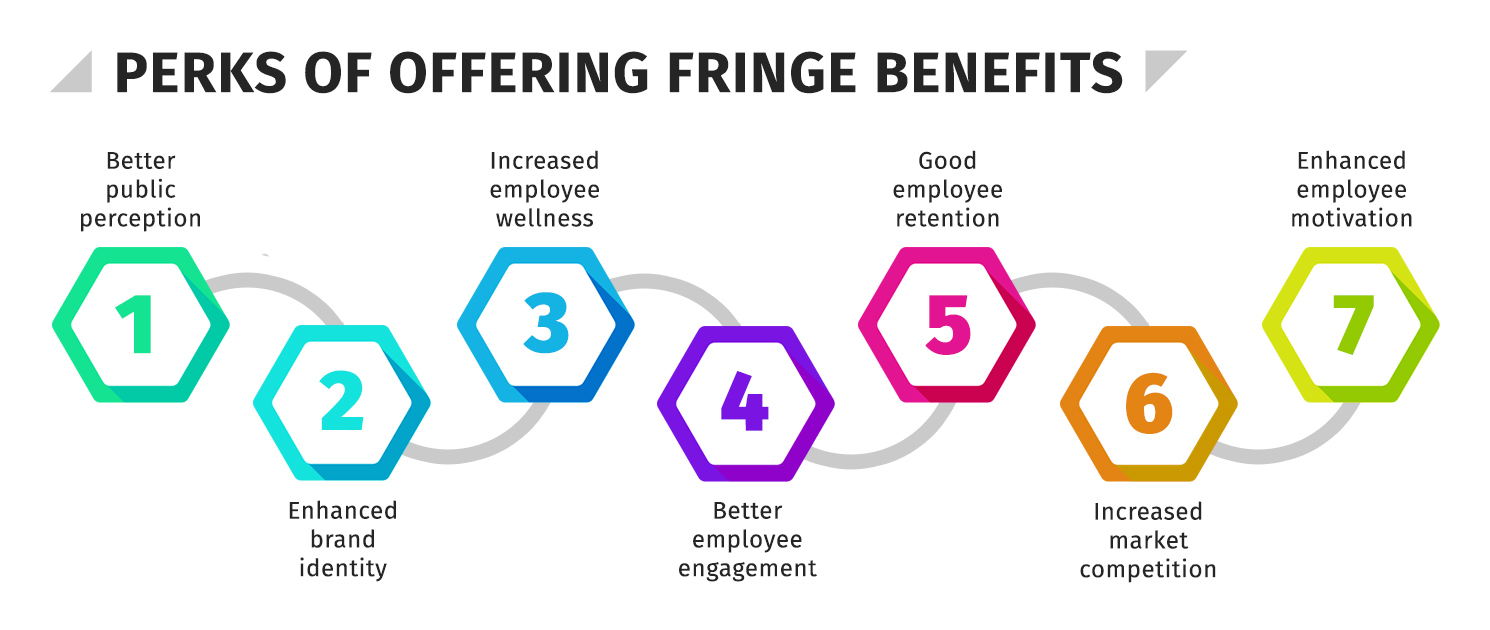
The easiest way I think about fringe benefits is through three buckets: protection, flexibility, and upside. Protection benefits help people feel secure, flexibility benefits help them manage real life, and upside benefits make the overall package feel more rewarding and competitive.
That mix matters because better benefits usually do more than make an offer letter look nicer. They can support retention, job satisfaction, work-life balance, and even broader employee engagement efforts, especially when they line up with what employees actually value instead of what leadership assumes they value. And when benefits are poorly designed or barely used, they can turn into expensive noise, which is why I also like keeping an eye on the cost of disengaged employees.
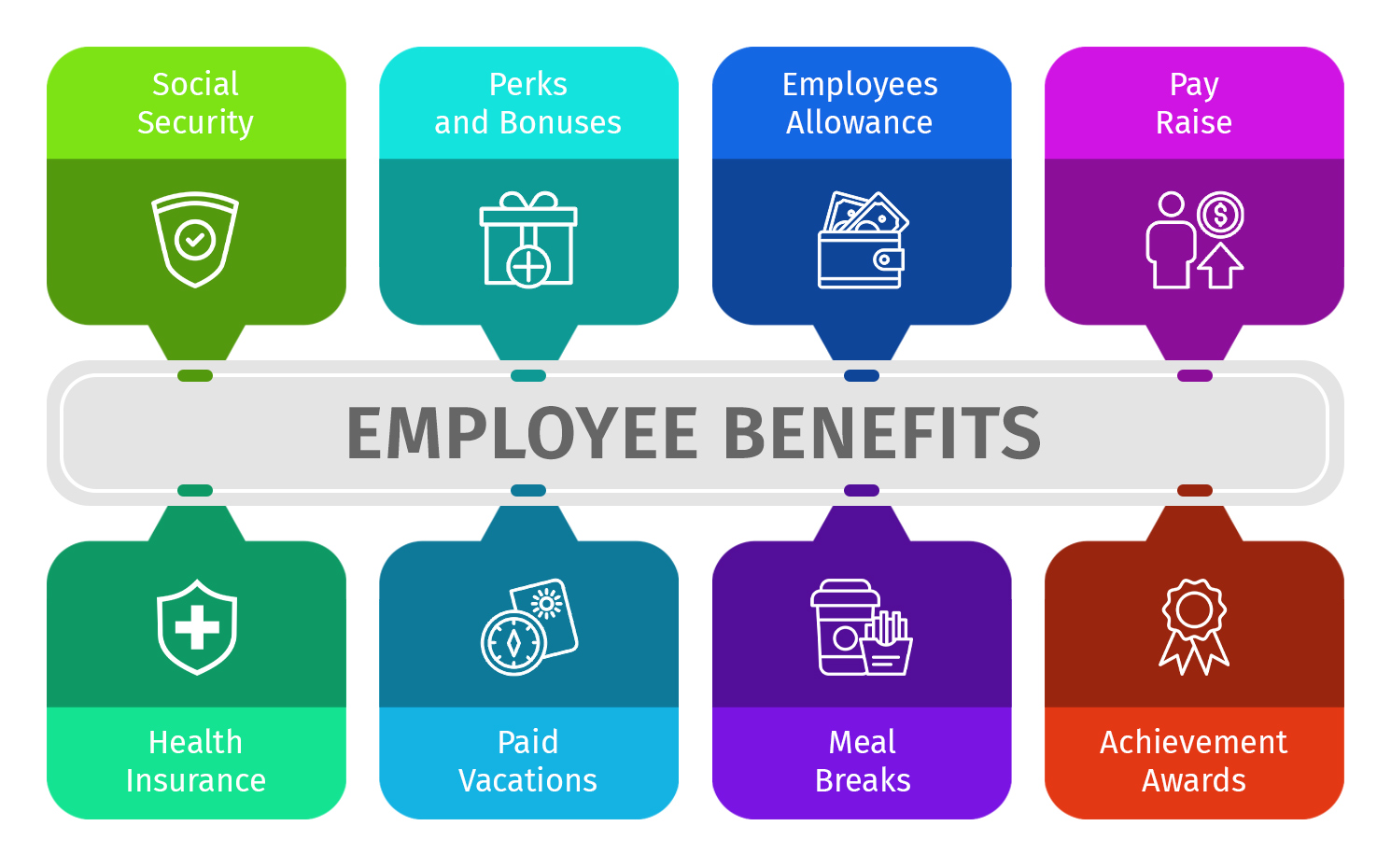
Health insurance is still the first fringe benefit most employees look for, and honestly, for good reason. If I were building a benefits package from scratch, this is where I’d usually start because it affects financial security, peace of mind, and how serious a company feels about taking care of people.
This category can also go beyond a standard medical plan. Dental coverage, vision coverage, health savings accounts, wellness programs, mental health support, and health reimbursement arrangements can all make the package feel more complete without forcing every dollar into one giant medical premium.
Paid time off is one of the most practical fringe benefits because employees actually use it. Vacation time, sick leave, floating holidays, parental leave top-ups, and policies around things like bereavement leave often matter just as much as flashier perks because they shape how supported someone feels during real life moments.
I also think leave policies say a lot about company culture. A company can talk about employee well-being all day, but people usually judge that pretty fast based on whether they can take time off without guilt, confusion, or a manager acting weird about it.
Retirement plans are less exciting in the moment than a bonus or a stipend, but they do a lot of heavy lifting over time. Employer-sponsored retirement plans, matching contributions, and access to retirement planning support help employees think beyond the next paycheck, which usually strengthens loyalty and makes the total package feel more serious.
This is one of those benefits that tends to matter more as employees get older or move into leadership roles. Even when candidates do not ask about it first, they notice when it is missing.
Commuter benefits are a good example of a fringe benefit that feels small until you calculate what employees are actually spending to get to work. Qualified parking, transit passes, vanpool support, mileage reimbursements, and similar transportation benefits can be meaningful in on-site or hybrid environments, especially in expensive metro areas. IRS guidance specifically covers qualified transportation fringes and their tax treatment, which is why I treat this category as more than just a casual perk.
I also like these benefits because they feel targeted. Instead of handing out a generic perk no one asked for, you are reducing a recurring cost employees already feel every week.
Flexible work arrangements have become one of the most requested fringe benefit categories because they solve everyday friction. Remote work allowances, internet stipends, office furniture reimbursement, technology allowances, and flexible scheduling can make a huge difference for distributed teams or for employees juggling commuting, caregiving, or nontraditional work patterns.
This is also where personalized design starts to matter. If you want a broader sense of how companies structure choice inside a benefits package, what flexible benefits are is a helpful starting point, and how to implement flexible benefits gets into the practical side of rolling them out.
That said, I would not confuse flexibility with chaos. Too many choices, too many exceptions, or poorly explained policies can make benefits harder to use, which is exactly why the common disadvantages of flexible benefits usually show up when companies personalize the package without simplifying the administration.
I’ve always liked educational benefits because they can help both the company and the employee at the same time. Tuition reimbursement, certification support, conference budgets, mentorships, and structured professional development can improve retention while also raising the skill level of the team.
This is especially useful in fields where the work changes fast. When employees feel like the company is investing in their growth instead of just extracting output, the relationship usually gets stronger.
Dependent care assistance is one of the most practical fringe benefits an employer can offer, especially for working parents or employees supporting family members. This can include dependent care programs, childcare subsidies, backup care support, adoption assistance, and family-oriented leave policies that reduce the stress of balancing work with caregiving.
I think this category is often underrated because it is not flashy. But for the employees who need it, it can be one of the most meaningful benefits in the entire package.
Group-term life insurance and disability coverage are classic fringe benefits because they protect employees from risks they may not be able to absorb on their own. They are not the kind of perk people brag about on LinkedIn, but they matter a lot when someone suddenly needs them.
I also think this is a smart place to include mental health and support resources. Things like counseling access, wellness reimbursements, and employee assistance programs can help people deal with stress before it turns into burnout, absence, or a resignation that could have been prevented.
This is where fringe benefits get more fun, but also a little more confusing. Employee discounts, occasional meal benefits, on-premises athletic facilities, small recognition gifts, and similar perks can improve morale, yet the tax treatment here is not always intuitive. The IRS treats some very small and infrequent perks as de minimis benefits, but cash and most cash-equivalent gift cards generally do not qualify for that exclusion and are usually taxable.
I usually think of this category as the culture layer, not the foundation. It can absolutely make a company feel more thoughtful, but I would not use free snacks and discount codes as a substitute for real protection benefits.
Bonuses, profit-sharing plans, signing bonuses, retention bonuses, and equity-style upside can all make a compensation package feel more compelling. I especially like these when they are tied to a real philosophy about performance, ownership, or long-term value creation instead of being tossed in as random sweeteners.
This is also where a lot of companies start blending fringe benefits with broader reward design. If you are trying to build something more motivating than base pay alone, I’d look at how employee incentive programs are structured, because that is often where the difference between a forgettable perk and a meaningful reward system starts to show.
The first thing I’d do is figure out what problem the benefit is supposed to solve. Is it there to improve retention, help with talent attraction, support work-life balance, reduce turnover, or make a hybrid team function better? If I cannot answer that clearly, I probably should not be adding the benefit yet.
After that, I’d run a simple employee needs assessment and segment the workforce a bit. Frontline employees, managers, parents, remote workers, and senior leaders often value different things, so one blanket package is not always the smartest design.
On the financial side, I’d calculate both direct cost and admin cost. That means the annual benefits cost itself, payroll taxes where applicable, software or broker fees, internal admin time, and any reporting burden. If you want the step-by-step math, how to calculate fringe benefits breaks down the fringe benefit rate formula and shows how employers usually divide total fringe benefit cost by annual wages or salary to understand the real percentage cost of the package.
I also like using a very plain ROI lens here. If the benefit costs real money, I want to know whether it is improving acceptance rates, retention, attendance, employee satisfaction, or productivity enough to justify staying in the package next year.
This is the part employers tend to underestimate. Fringe benefits are not automatically tax-free just because they are called benefits. The IRS generally treats fringe benefits as part of an employee’s gross income unless a specific exclusion applies, and the taxable amount is usually based on fair market value after subtracting what the employee paid and any amount the law excludes.
That also means reporting matters. Taxable fringe benefits generally have to be included in wages and reported appropriately, often on Form W-2 for employees, which is why I’d keep the IRS Publication 15-B guide to fringe benefits bookmarked if I were managing this in-house.
I’d also separate optional fringe benefits from legally required obligations. Workers’ compensation, unemployment-related obligations, Social Security and Medicare taxes, and leave rules do not belong in the same mental bucket as meal stipends or gym perks. For private employers, workers’ compensation rules are largely handled at the state level, while federal leave requirements like FMLA apply only in specific employer and employee situations.
For leave in particular, I would not wing it. The Department of Labor’s FMLA overview is the cleanest place to start because eligible employees of covered employers can receive up to 12 weeks of unpaid, job-protected leave with continued group health benefits, and the eligibility rules are more specific than many managers realize.
One mistake I see a lot is companies copying benefit packages from businesses that have completely different workforces. Tech companies and remote-first teams often get more value from flexible schedules, home office stipends, learning budgets, and internet reimbursements than from on-site perks employees never use.
Healthcare, hospitality, retail, and other frontline-heavy employers often need to think more practically. Predictable scheduling support, dependent care help, transportation support, and leave clarity can matter more than trendy lifestyle perks because those are the benefits that reduce real friction for people doing demanding work.
Professional services, nonprofits, and knowledge-work teams often get a lot of mileage out of tuition reimbursement, strong retirement contributions, wellness support, and extra paid leave. There is no universal best list here. The right package depends on the workforce, the budget, and what kind of employer experience you are actually trying to create.
Fringe benefits work best when they feel intentional. I would much rather see a company offer six well-used benefits that solve real problems than fifteen random perks employees barely touch.
That is also why I think this topic connects so closely to overall benefits strategy. If you want a more customizable version of the same idea, these flexible benefits examples are worth reviewing too, because that is usually where companies start moving from one-size-fits-all perks into more personalized benefit design.
Here I answer the most frequently asked questions about fringe benefits.
A fringe benefit is any form of compensation an employee receives in addition to regular pay. It can include health insurance, retirement contributions, commuter support, tuition reimbursement, discounts, or smaller lifestyle perks.
Some are, and some are not. The big issue is not whether something feels like a perk, but whether the benefit qualifies for a specific tax exclusion and whether it is being administered correctly.
They can fall into the broader fringe-benefit conversation, but from a tax standpoint they are usually treated as taxable compensation. Gift cards especially trip people up because they often feel small, but they are usually handled more like wages than de minimis perks.
Some employer obligations are required, but not every fringe benefit is. That is why I like separating legally required items from optional benefits, because things like leave laws, workers’ compensation obligations, and payroll-related requirements should not be managed like voluntary perks.
The usual approach is to total the annual cost of the employee’s fringe benefits, add applicable payroll-related costs, divide by annual wages or salary, and convert that number into a percentage. That gives you a fringe benefit rate you can compare across roles or benefit designs.
The ones employees actually use. In most cases, that means health coverage, paid time off, retirement support, flexibility, and family-friendly benefits do more for retention than novelty perks.
Get the weekly newsletter keeping 30,000+ HR pros in the loop.
Learn the fundamentals and advance your career.

















Get our #1 industry rated weekly technical writing reads newsletter.
Your syllabus has been sent to your email