
Our reviewers evaluate software independently. Learn how we stay transparent, our methodology, and tell us about anything we missed.

Home › HR Career Path ›
Our reviewers evaluate software independently. Learn how we stay transparent, our methodology, and tell us about anything we missed.
Looking to know what a senior HR manager does? You are at the right place.
A senior HR manager is a managerial position in which you are involved in decision-making, planning, and overseeing the HR department. It is a lucrative role that comes with many challenges and responsibilities.
Seventy-five percent of human resources professionals said their jobs are getting more demanding. As a senior manager, you must ensure on-time talent acquisition and retention, but this isn’t the only thing a senior HR manager must do.
A senior HR manager is responsible for planning, leading, controlling, and evaluating several human resources management department tasks. In large organizations, a senior manager leads the entire HR department and overlooks different HR managers from various teams. For example, the training manager, benefits manager, HRIS manager, and analytics manager will all report to the senior manager.
Here is a typical HR hierarchy provided by Ongig:
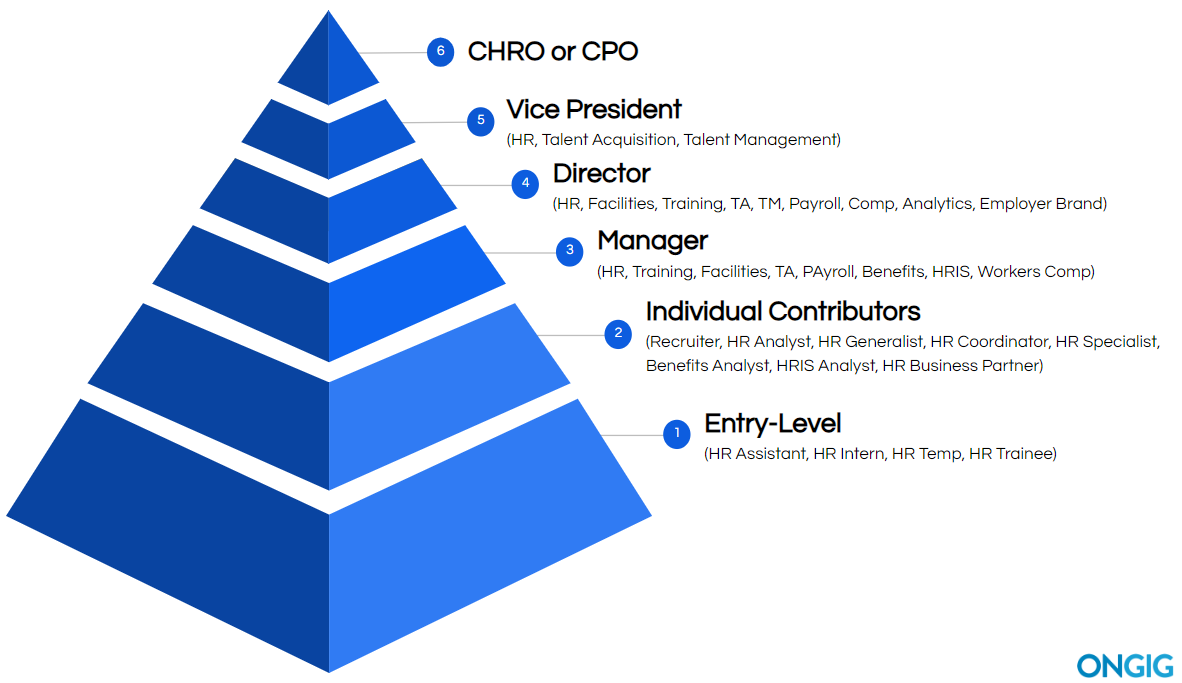
The senior HR manager is a title between the human resources manager and director. It links several human resources managers and the HR director throughout a large human resources department.
The role is common in large multinational companies with several managers for their human resources department to appoint a senior HR manager as the head of all the managers.
Here is an example of a job post for a senior manager by Boeing:
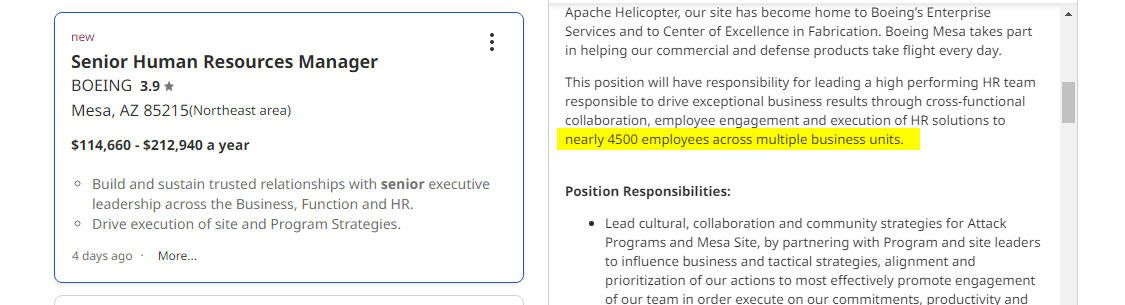
Businesses with a huge workforce need a centralized, streamlined HR department with clear roles and hierarchies to avoid complications.
A senior HR manager must possess diverse skills to meet the requirements of the title. It is a key management position, so the responsibilities are flexible and vary from organization to organization.
Here are the primary responsibilities and duties:
A senior manager’s core responsibility is to manage cross-functional teams and ensure they meet their targets. If designated managers manage these teams, the senior manager manages and deals with those designated managers.
In any case, it is the senior HR manager’s responsibility to ensure that the human resources department performs its duties as expected. This involves executing and managing day-to-day human resources tasks ranging from employee management to salaries and benefits to HR solution execution to hiring and firing, and more.
So, a senior manager will spend most of his/her time managing the team and ensuring the organization and the human resources department are moving in the right direction (as planned).
It is the responsibility of the manager to set HR objectives (with the consultation of the HR director). There are different types of HR objectives that a senior HR manager has to deal with, including:
Senior managers are responsible for setting these objectives, creating and executing a plan of action, and tracking progress. They work with the team and ensure things are moving as planned.
A senior HR manager spends most of the time creating a plan of action for all these objectives and converting long-term objectives into monthly and quarterly goals. They are held accountable if HR fails to meet any of these objectives.
Looking to become an HR manager? Enroll in our top-rated HR management certification course to master the fundamental HR management skills, secure a senior human resource manager job, and excel in your career:

The senior HR manager is also responsible for managing the hiring process throughout the organization. Recruitment is a continuous process that runs throughout the year in enterprise businesses.
Here is what the hiring process looks like (image provided by AIHR):
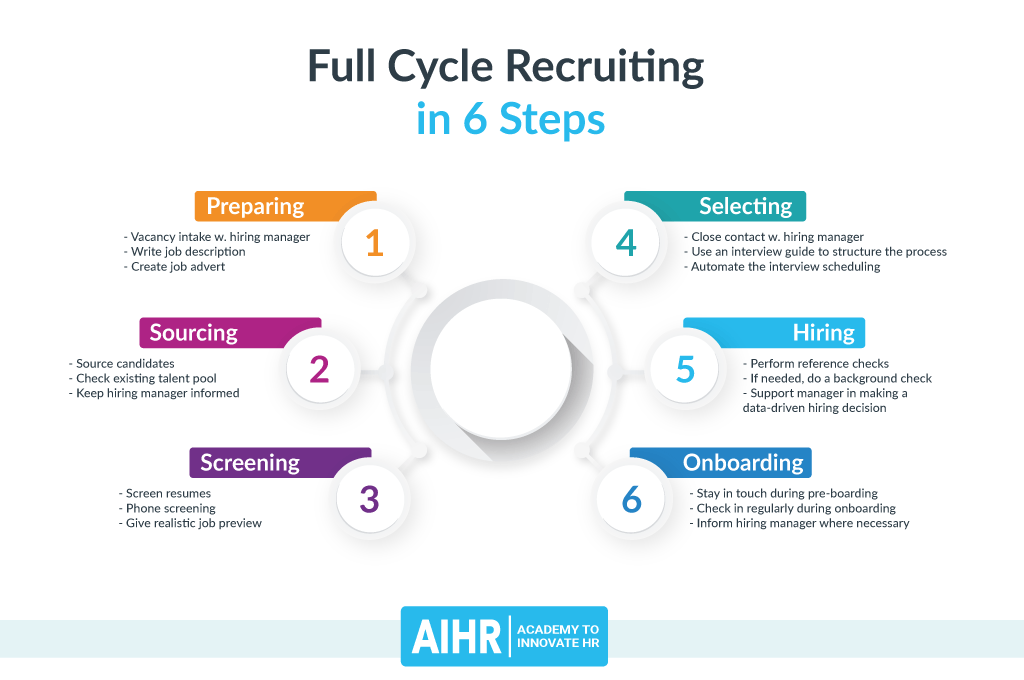
This recruitment process runs for different departments (based on departmental needs and organizational objectives), and the senior manager is responsible for executing and managing it via the applicant tracking system and his/her team.
For example, the HR team is involved in the onboarding process in the finance department, while the marketing department performs the screening step of the hiring process.
So, it keeps running, and the senior HR manager has to manage it to ensure that recruitment needs are fulfilled without delay.
Senior managers spend a lot of time measuring and tracking HR performance. This is done by monitoring key HR metrics such as:
A senior HR manager monitors these metrics and tweaks strategy if they deviate.
Creating and managing the funds and resource allocation for the HR department is also a key task a senior HR manager has to perform. Budgeting involves a lot of tasks, including:
Human resources management is the key department involved in budgeting along with the finance department. HR handles employee payroll systems, calculates final salaries and bonuses, and then disburses them to the finance department.
And a senior manager is the one who overlooks and approves everything at the end of the day.
Human resources policies are essential for any business as these are used to ensure the company follows local laws. These HR policies cover the following areas:
Creating and implementing these HR policies is the job of a senior HR manager. They need to ensure that the policies are followed throughout the organization. Updating and revising policies based on new laws is also the responsibility of the senior manager (image provided by Strategy Advisors):
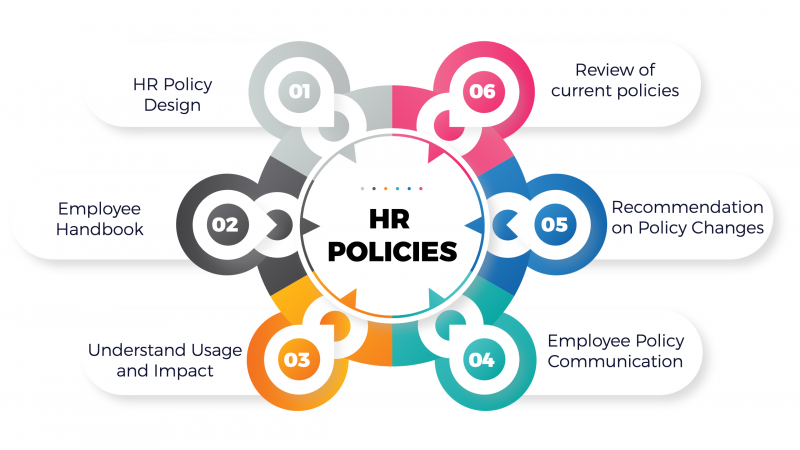
Creating and revising HR policies is continuous, and the senior HR manager oversees these policies.
The senior manager interacts with external businesses and partnering companies. For example, the senior HR manager is responsible for signing MOUs, meeting business leaders, working with advertising agencies, partnering with training and development companies, and more.
Collaborating with other departments and conducting sessions, coaching programs, and meetings are essential. A senior manager’s role is to understand the needs of departments and teams and then create appropriate plans to meet those needs.
It is a key decision-making position. A senior manager makes many decisions daily, such as assigning tasks, creating teams, tweaking an HR campaign, and more.
They also share the human resources department’s report with the seniors. The senior manager manages and handles the HR analytics and reporting.
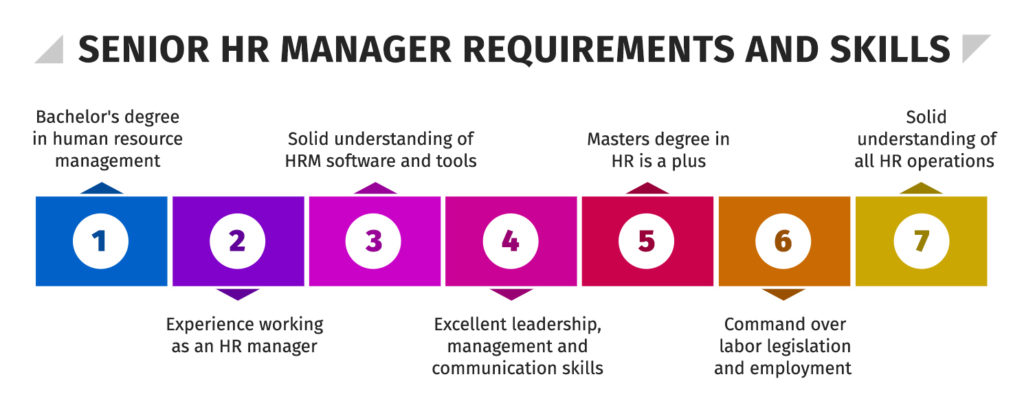
Here are the typical requirements and qualifications for a senior manager:
It often gets challenging for new senior managers to make an impact when they start their new roles. If you have joined a company as a senior manager, follow these tips to kickstart your new position:
A senior manager’s role isn’t easy. You have to lead and manage a complete department end-to-end. Responsibilities and challenges are common in this role. Don’t hesitate to become a risk-taker.
Here are the most frequently asked questions about the senior HR manager role:
A senior HR manager plays a crucial role in an organization’s human resources department. They are responsible for overseeing employee relations, developing HR strategies, and ensuring the company adheres to labor laws. Senior managers also act as strategic partners within the leadership team, guiding company policies and HR initiatives related to employee development and workplace culture. Additionally, they often manage applicant tracking systems (ATS) to ensure a smooth recruitment process while improving employee experience.
One of the key responsibilities of a senior HR manager is managing employee relations. They work to resolve conflicts between employees, promote a healthy work environment, and ensure fair treatment of all staff members. Senior HR managers are also involved in developing policies that encourage employee satisfaction and retention and handling issues such as workplace harassment or discrimination. By fostering solid relationships with employees and leadership, they help maintain a productive and respectful organizational culture.
A senior HR business partner works with department heads and hiring managers to align recruitment efforts with business goals. They use applicant tracking systems to streamline the hiring process, ensuring that potential candidates are evaluated efficiently and effectively. Senior HR manager partners also contribute by identifying key talent, improving recruitment practices, and ensuring the organization’s hiring procedures comply with legal standards. They are critical in attracting and retaining top talent to meet the company’s evolving needs.
Senior HR managers rely on applicant tracking systems (ATS) to simplify the hiring process. ATS software helps them manage job applications, filter candidate profiles, and track interactions with potential hires. These systems improve recruitment efficiency by automating many administrative tasks, allowing senior HR managers to focus on strategic decision-making. Moreover, ATS ensures that all applicant data is stored securely, helping HR managers comply with privacy regulations while maintaining a seamless candidate experience throughout the recruitment process.
If you are new to human resources and are looking to break into an HR management role, we recommend taking our HR Management Certification Course, where you will learn how to build your skillset in human resources management, build your human resources network, craft an excellent senior HR manager resume, and create a successful senior HR manager job search strategy.
Learn modern HR management and advance your career.
Your syllabus has been sent to your email