Our reviewers evaluate software independently. Learn how we stay transparent, our methodology, and tell us about anything we missed.

Home › HR Career Path ›
Our reviewers evaluate software independently. Learn how we stay transparent, our methodology, and tell us about anything we missed.
In fast-growing companies, HR is kind of like the operating system. When it’s working well, everything feels smooth. Teams move faster, decisions get clearer, and small issues don’t turn into big ones. When it’s not, you start noticing lag everywhere.
I’ve spent a lot of time close to that layer of the business in SaaS environments where things scale quickly, and cracks show up even faster. And what I’ve seen is that a strong senior HR manager doesn’t just “support” the company. They remove friction across the entire organization.
I know that might sound a bit abstract, but it’s one of those roles where the impact is obvious once you’ve seen it done well.
This isn’t pulled from a generic job description. It’s about what happens when a company starts growing fast, and HR has to shift from reacting to problems to shaping how the company runs, without losing the human side in the process.
In this guide, I’ll break down what a senior HR manager does, where the role gets challenging, and what skills matter.
A senior HR manager is the person who integrates separate HR functions into a single operating system for the company. In smaller organizations, that can mean wearing a lot of hats. In larger ones, it means leading managers or specialists across recruiting, employee relations, benefits, payroll, HR systems, and learning and development.
Here is a typical HR hierarchy provided by Ongig:
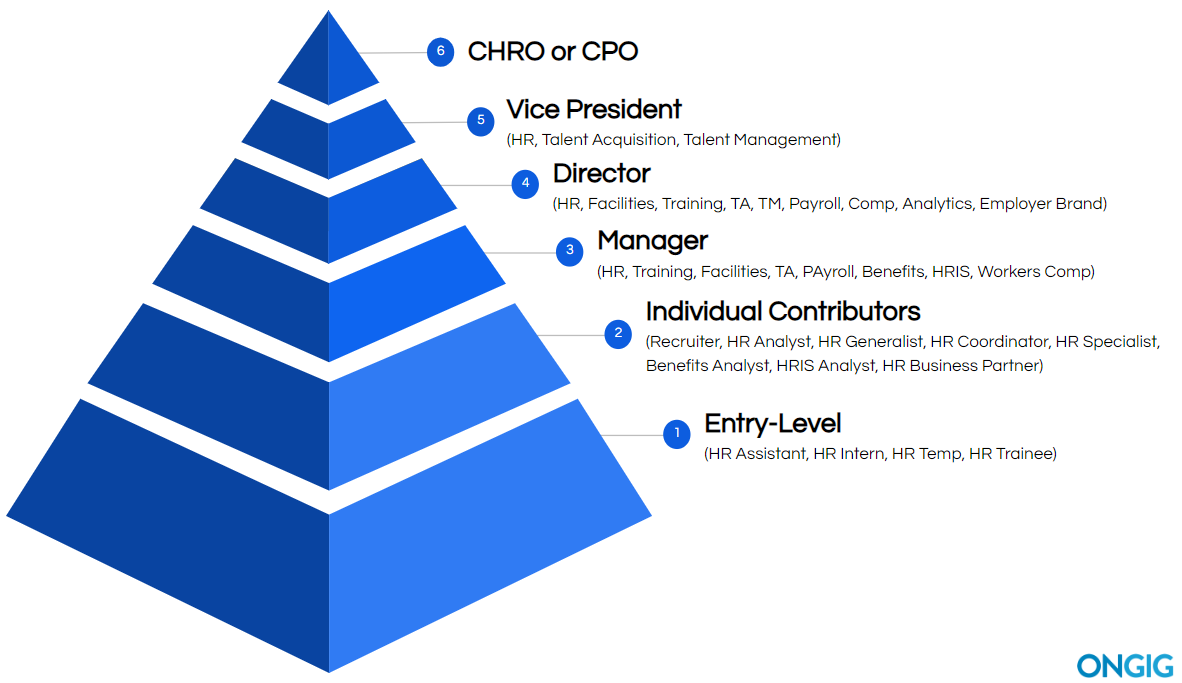
From my perspective, the role sits between strong day-to-day HR management and broader executive people leadership. In some companies, that means partnering with a director, VP of HR, or Head of People. In others, it means acting like the most senior practical operator in the HR function, even if someone else owns the top title.
I think about the role in three layers. First, a senior HR manager leads people. Second, they own systems like budgets, policies, workflows, and reporting. Third, they help leadership make better decisions about staffing, performance, retention, structure, and risk.
That’s why I connect this guide to what an HR manager does with this breakdown of strategic human resource management. Together, they explain why this job becomes more complex as a company grows. The senior title is not just about more years of experience. It’s about owning more moving parts at the same time.
The bigger the organization gets, the less this job is about handling one-off HR tasks yourself. It becomes much more about judgment, prioritization, and helping other leaders make better people decisions at scale.
In larger companies, a senior HR manager may work alongside recruiters, HRIS analysts, employee relations specialists, compensation and benefits managers, payroll leads, training and development managers, or labor relations partners. In leaner companies, the title can still cover many of those responsibilities, just with fewer layers and less specialized support.
Here is an example of a job post for a senior manager by Boeing:
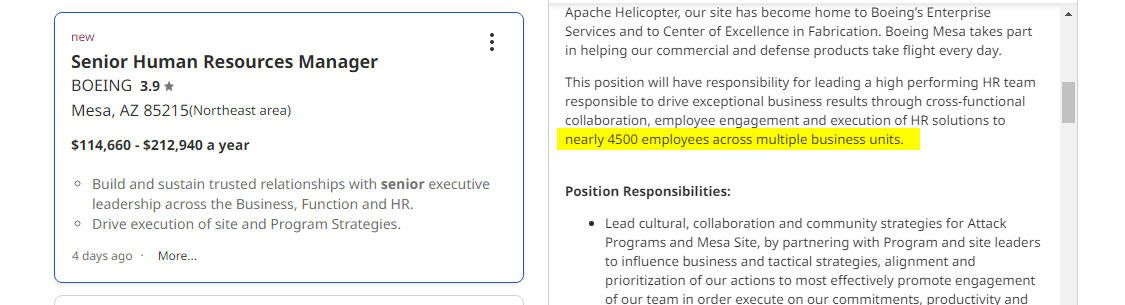
Businesses with a huge workforce need a centralized, streamlined HR department with clear roles and hierarchies to avoid complications.
When I strip the title down to basics, a senior HR manager owns the people side of execution. That means making sure the business can hire well, onboard well, manage performance, handle employee relations, and keep the HR function moving without constant compliance surprises.
On paper, the list of responsibilities can look huge. In reality, it includes recruitment process management, payroll coordination, benefits oversight, personnel administration, performance systems, succession planning, compliance monitoring, reporting, and escalation support for harder employee issues.
What makes the role senior is not just how many tasks touch your desk. You’re accountable for whether the whole system works, which is why I see this role as sitting between modern HR operations and people operations.
The strongest senior HR managers think beyond today’s urgent requests. They understand how hiring, development, retention, compensation, and structure all affect one another, which is why I like tying the role to a broader understanding of talent management instead of treating every HR problem as a separate fire to put out.
One mistake I see a lot is treating this job like a more senior version of administration. It isn’t. The role is about building repeatable systems that let managers lead better, employees get clearer support, and executives make smarter people decisions with fewer blind spots.
A senior HR manager rarely succeeds by being the smartest individual contributor in the room. The role works better when that person can make the entire HR team more consistent, faster, and calmer under pressure.
That means setting clear objectives for recruiters, HR generalists, employee relations staff, HRIS analysts, payroll partners, and learning or benefits specialists. In bigger organizations, it can also mean managing other managers, which is a very different skill from simply doing strong HR work yourself.
I’d expect a strong senior HR manager to run a clean operating rhythm. That includes weekly team check-ins, clear ownership, strong one-on-ones, realistic service expectations, and quarterly priorities.
A big part of the job is also developing talent inside HR. The best leaders create stretch opportunities, coach better judgment, and help team members grow into specialist or leadership roles, which aligns with the leadership competencies when guiding both people and process.
I’m also a big believer that this role requires emotional steadiness. When compensation questions, grievances, reorg conversations, and urgent hiring needs all hit at once, the HR team takes its emotional cue from the person in charge.
Recruiting is one of the easiest places to tell whether a senior HR manager is strategic. Anyone can keep jobs open and move resumes through an applicant tracking system. What matters is whether the company is hiring the right people, at the right pace, with a process that is fair, consistent, and sustainable.
In practice, that means tying hiring plans to business goals instead of just backfilling roles one by one. A senior HR manager should help forecast headcount, align job requirements with real business needs, manage vendor or agency relationships as needed, and ensure recruiting spend matches actual urgency.
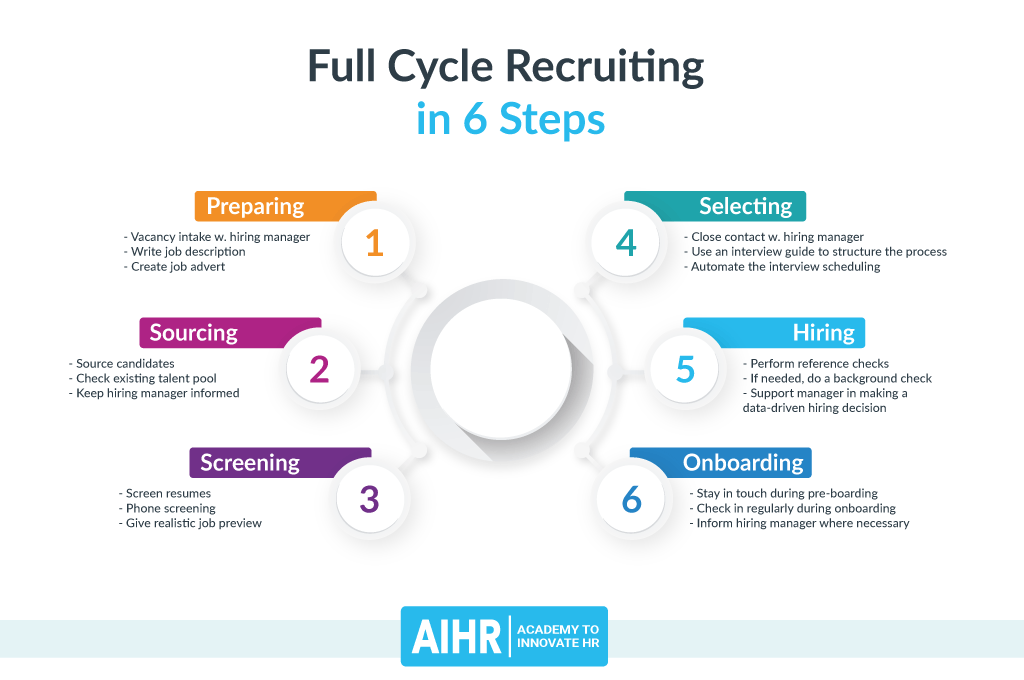
That’s why I like connecting strategic workforce planning with full life cycle recruiting. The best hiring systems start long before a requisition opens. They start with clear workforce plans, realistic role design, and hiring managers who know what they need.
The role also stretches beyond the offer letter. I’d expect a senior HR manager to care about candidate experience, onboarding quality, manager readiness, and the first 90 days of performance, because all of that affects retention later. A strong employee onboarding process should feel like the company is keeping its promise to the new hire.
I’d also expect this role to influence inclusive hiring practices and interview consistency. When I want a practical outside reference for that, I still like the EEOC’s guidance on recruiting, hiring, and promoting employees. It keeps the basics honest and reminds HR teams where fairness has to show up in the actual process.
Looking to become an HR manager? Enroll in our top-rated HR management certification course to master the fundamental HR management skills, secure a senior human resource manager job, and excel in your career:

I’ve learned that senior HR managers get taken much more seriously when they can explain people issues in numbers without losing the human nuance. Data is what helps them move from “I think we have a retention issue” to “here’s where attrition is concentrated, what it may be costing us, and what I’d change first.”
The dashboard itself does not need to be complicated. What it needs is relevance. I’d want reports on headcount, time-to-fill, cost-per-hire, turnover, absenteeism, engagement, internal mobility, performance trends, training completion, and the status of high-risk employee relations issues.
If I were walking into a new senior HR manager role, I’d start with a small set of decision-making metrics and expand only after the team trusts the numbers. These HR KPIs give a strong baseline, and a solid people analytics mindset helps you separate signal from noise before you start making big decisions.
Turnover is a big one, which is why I still like grounding that conversation in a simple turnover rate calculation. I’d also pay close attention to employee satisfaction, manager effectiveness, and employee performance metrics, because they indicate whether hiring, development, and leadership are working together.
Reporting matters for one more reason. A senior HR manager is often the person translating between the HR team and senior leadership, so the numbers need to be clear enough that a CEO, CFO, or department head can act on them without needing an extra hour of interpretation.
Here is what the hiring process looks like (image provided by AIHR):
To be honest, budgeting is one of the clearest separators between a good HR manager and a senior one. This part of the job covers salaries, bonuses, health insurance, retirement plans, perks, recruitment spend, vendor contracts, learning and development budgets, recognition programs, retention initiatives, administrative costs, and the technology stack the HR team depends on.
What I like about this responsibility is that it reveals whether someone can make trade-offs. It’s easy to say people matter. It’s much harder to decide whether this quarter’s money should go to another recruiter, a better HR system, manager training, a retention program, or a more competitive compensation package.
A strong senior HR manager partners with finance here. They help forecast headcount costs, pressure-test compensation plans, model the impact of hiring freezes or expansion, and figure out which investments reduce risk or improve employee experience enough to justify the spend.
I also think resource allocation is bigger than money. It includes how you allocate team time, leadership attention, and implementation capacity. If the HR team is buried in admin work, it may be worth reviewing HRIS systems and other workflow tools to ensure your best people are not wasting time on manual coordination.
The best senior HR managers I’ve seen are disciplined but not cheap. They know how to control costs without starving the systems that attract, support, and keep strong employees.
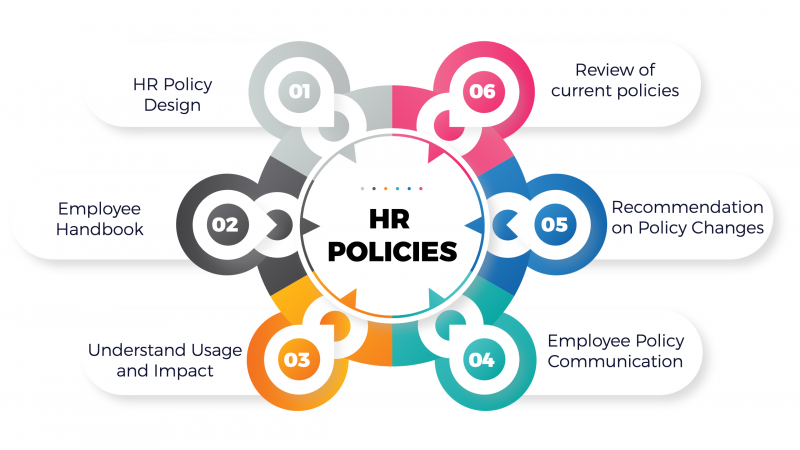
A senior HR manager plays a significant role in writing, revising, and enforcing the rules that keep the workplace functioning. That includes policies on leave, conduct, performance, compensation, remote work, attendance, safety, harassment, discipline, investigations, and sometimes broader areas like diversity, inclusion, and manager accountability.
I don’t think good policies should read like documents written only for lawyers. They need to be compliant, yes, but also clear enough that managers can use them and employees can trust them. When policy language is vague, enforcement gets inconsistent, and that’s when credibility starts to crack.
Implementation is the part people underestimate. A strong senior HR manager does not just publish a handbook update and move on. They train managers, update workflows, align systems, communicate the why behind the change, and check whether people are following the process in the real world.
That’s why I like pairing practical HR policy examples with a real HR audit mindset. The policy only becomes useful when you can operationalize it, review it, and improve it over time. This is also where policy adherence starts to feel less like theory and more like a management discipline.
When this part of the job is done well, employees feel more clarity and leaders feel less chaos. When it’s done badly, every employee relations issue becomes more expensive, slower, and more emotional than it needed to be.
One reason I respect senior HR managers is that they spend a huge amount of time coordinating with people who do not report to them. In any given week, they may need to align with department heads, finance, payroll, legal, recruiting agencies, benefits brokers, training vendors, IT, and executive leadership.
That is why I think of the role as part translator, part operator, and part diplomat. A department head may talk in terms of missed deadlines and headcount pressure, while HR talks in terms of hiring pipeline, compensation bands, policy risk, and employee experience. The senior HR manager has to consolidate those into a single shared plan.
This becomes even more important when there is tension. Conflict management, grievance procedures, promotion disagreements, labor questions, or leadership misalignment all require someone who can remain objective while still moving the issue forward. That business-partner mindset overlaps a lot with what strong HR business partners do when they help leaders make better decisions.
External relationships matter too. In larger organizations, a senior HR manager may help evaluate vendors, coordinate with partnering companies, support labor counsel, or work with training and development providers. In unionized or regulated environments, this can also include input on grievance handling, labor practices, or the practical side of labor contract administration.
The best collaborations I’ve seen happen when HR is brought in early, not after leaders have already created a people problem. Senior HR managers earn that seat by being practical, commercially aware, and consistent.
Updating and revising policies based on new laws is also the responsibility of the senior manager (image provided by Strategy Advisors):
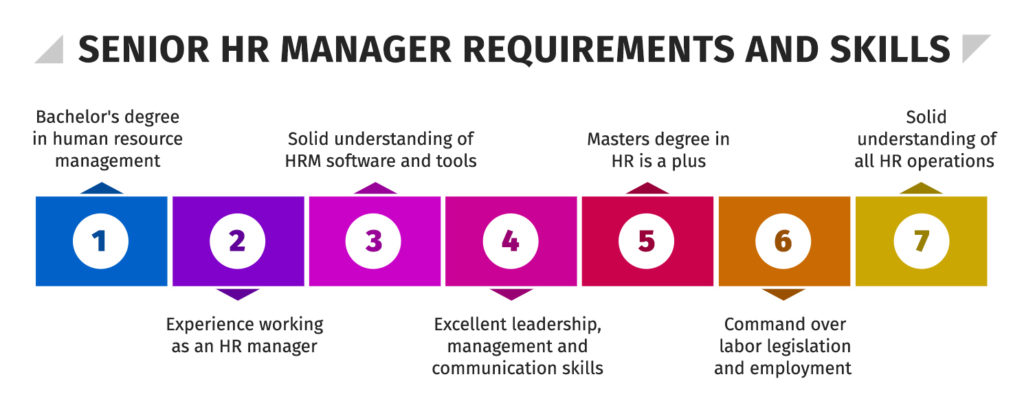
Most companies want a mix of education, hands-on HR experience, systems knowledge, and managerial judgment. In most cases, that means a bachelor’s degree, several years of related HR experience, strong communication and analytical skills, and working knowledge of labor laws, compensation, recruiting, performance management, and employee relations.
Degrees in human resources, business, psychology, or organizational psychology are all common entry points. A master’s degree or professional HR certification can help in some organizations, but I still think experience owning real outcomes matters more than stacking credentials without evidence of execution.
If I were screening candidates, I’d look for evidence that they’ve led cross-functional work, owned outcomes instead of tasks, and improved a people process that mattered. And if you’re unsure what that looks like in practice, it’s worth checking out these foundational HR skills from AIHR.
I’d also want fluency with an applicant tracking system, an HRIS, reporting dashboards, payroll workflows, benefits administration, and the basics of compliance documentation. For a cleaner national snapshot of typical education, experience, pay, and outlook, I like the Occupational Outlook Handbook entry for human resources managers. It gives a solid baseline without the fluff.
What separates stronger candidates, in my experience, is whether they can use tools to make better decisions, reduce administrative drag, and help other managers lead more effectively.
The path to a senior HR manager role is not a single giant leap. Most people build toward it through roles like HR coordinator, HR specialist, recruiter, HR generalist, people operations manager, employee relations partner, or HR manager. Over time, the job shifts from handling individual cases to owning systems, teams, and business outcomes.
If I were trying to grow into this role, I would chase scope before title. I’d want experience managing a process end-to-end, owning a metric, partnering with finance or legal, supporting managers through hard decisions, and leading at least one project that changed how the company hires, develops, or retains people.
That’s why I think it helps to study both the HR manager career path and the broader human resources career path.
Professional development here should stay practical. Learn how to read workforce data, build clearer policies, manage budgets, run better stakeholder meetings, coach managers, and use systems like ATS, HRIS, payroll, and performance tools with confidence. Much of the valuable development in this role still comes from on-the-job training through more challenging projects and broader ownership.
I also would not ignore the market-facing side of the role. Looking at typical senior HR manager salary expectations or sample senior HR manager job descriptions can show you what employers are rewarding right now, which helps you decide what to learn next.
When I look at the best senior HR managers, I don’t see admin leaders. I see business leaders who happen to specialize in people systems. They know how to hire, coach, structure, measure, protect, and scale an organization without stripping the human element from it. That mix is hard to find, which is why the role matters so much.
Here I answer the most frequently asked questions about senior HR managers.
A senior HR manager oversees the big operational and strategic parts of HR at the same time. That often includes hiring, employee relations, performance management, reporting, policy implementation, team leadership, compliance, and budget oversight.
What makes the role different from a more junior HR position is the level of accountability. The senior HR manager is responsible for whether the HR system works across the company, not just whether individual tasks get completed.
Employee relations is a major part of the role because senior HR managers often step into more sensitive or higher-risk situations. They help resolve conflicts, guide managers through disciplinary issues, review investigations, and ensure employee concerns are handled consistently and fairly.
They also shape policies and manager training that prevent many of those issues from worsening.
Yes, in many organizations, a senior HR manager either owns the HR budget or plays a major role in planning and monitoring it. That can include salaries, bonuses, recruiting spend, benefits, HR technology, training, retention programs, and vendor costs.
This job is about allocating resources in a way that supports business goals while protecting employee experience and operational stability.
They are very involved in larger or faster-growing companies. They may not handle every interview or every onboarding task, but they often shape the hiring process, approve staffing priorities, monitor recruiting metrics, and improve the systems managers use to hire and onboard employees.
They also tend to care a lot about what happens after the offer is signed. A strong onboarding experience affects performance, retention, and trust, so senior HR managers usually keep a close eye on it.
Most employers want a bachelor’s degree, several years of related HR experience, and strong communication, leadership, and analytical skills. Experience with employee relations, compliance, compensation, recruiting, performance management, and cross-functional leadership is more important than any single credential on its own.
On the tools side, fluency with ATS platforms, HRIS tools, payroll systems, reporting dashboards, and benefits workflows is extremely helpful.
The next step often depends on company size and structure, but common moves include HR director, Director of People, Head of HR, or VP of HR. In some organizations, a senior HR manager may also shift into a more specialized leadership role in employee relations, talent acquisition, HR operations, or people analytics.
The best move depends on what part of HR you want to own on a bigger scale. If you prefer broad business partnerships, you may move toward director or executive leadership roles. If you prefer depth, a specialized leadership track can make just as much sense.
Learn modern HR management and advance your career.
Your syllabus has been sent to your email